The Power of Unlikely Friends: A Look Inside Houston Climatetech Summit 2026
At the sixth annual event, founders agree: on the entrepreneurial journey, the comeback always counts more than the setback.
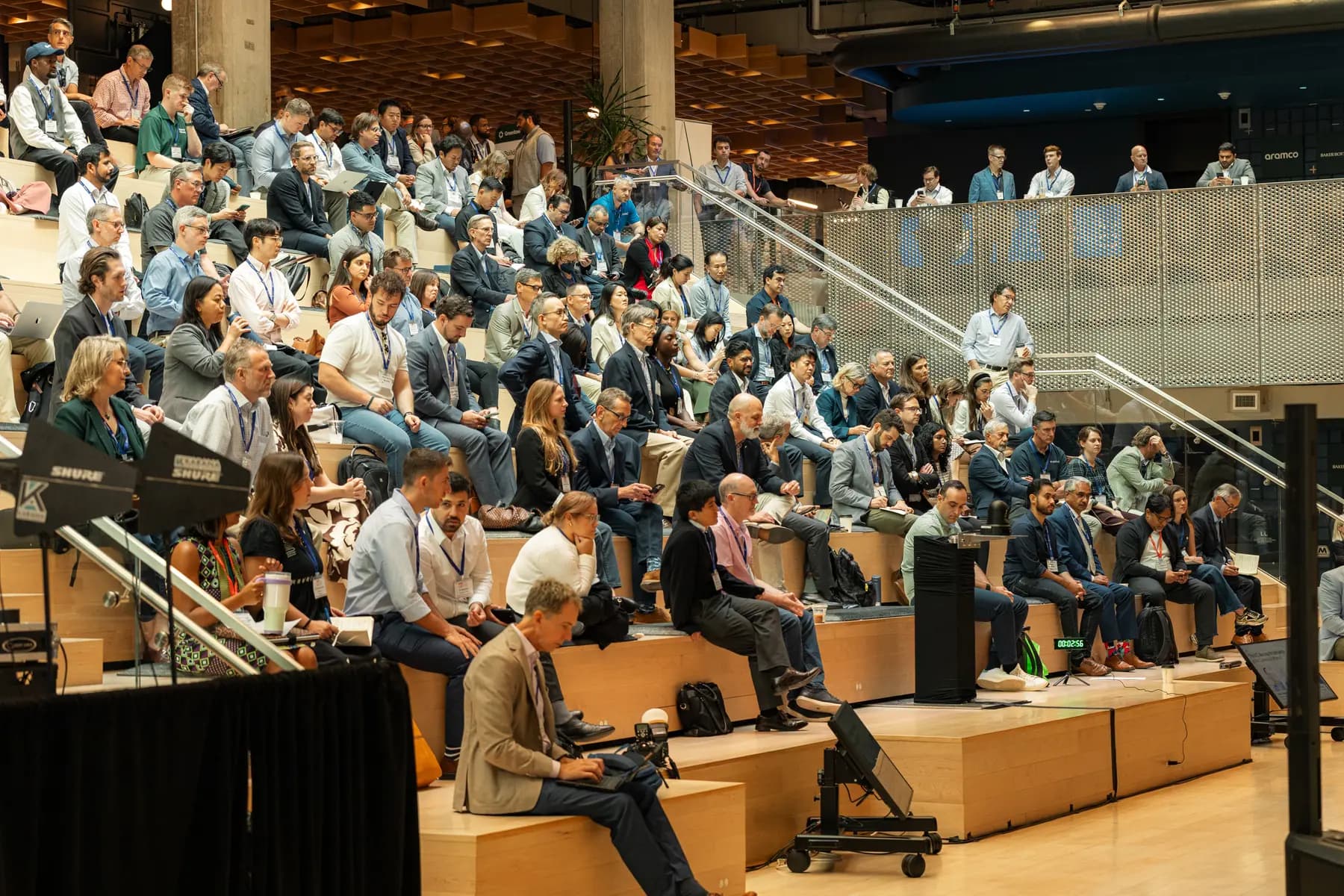
Greentown Houston's Climatetech Summit convened the region's energy, climate, and industrial-innovation crowd for its sixth year this week, welcoming 450+ attendees with more than 375 more joining virtually. This year's event was themed "Powering the Future: From Launching Unicorns to Scaling Infrastructure," offering a deep dive into the innovations and collaborations that are driving transformations across industries for a sustainable, abundant, resilient future.
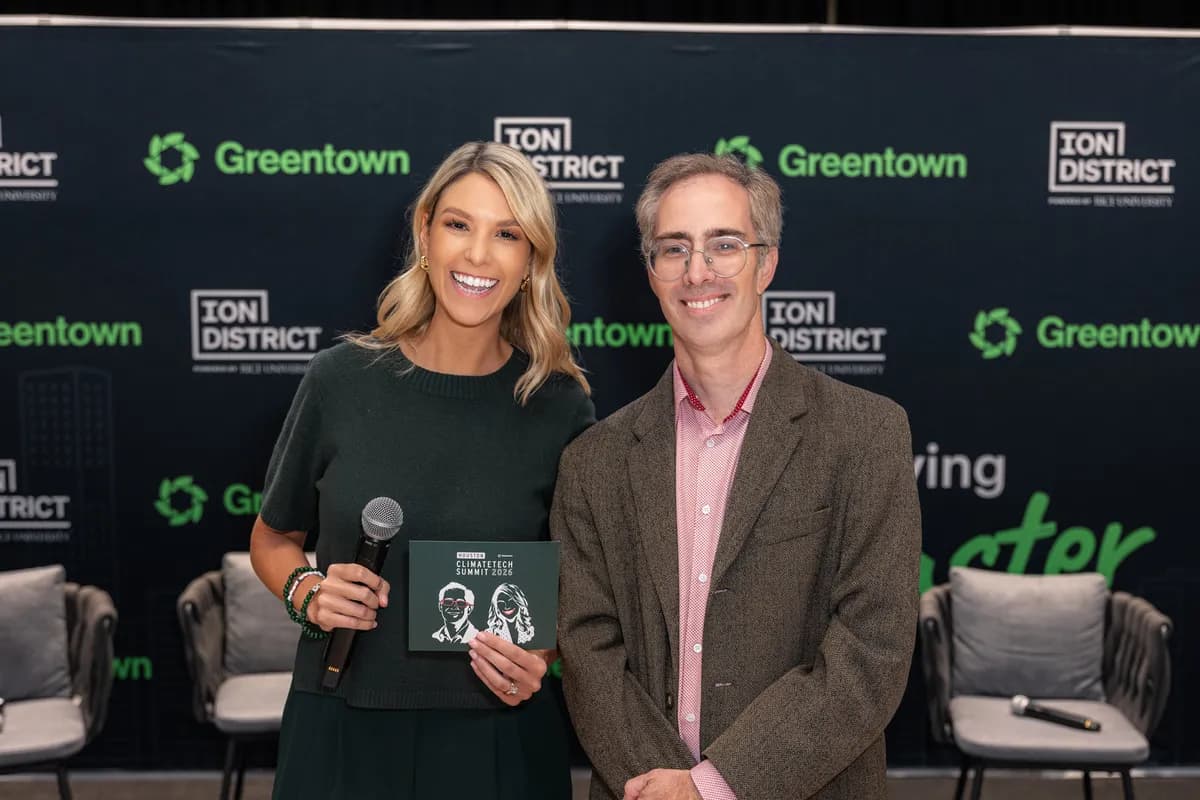
The daylong celebration of all things climate and energy innovation kicked off at the Ion, where emcees Kelsey Kearns, Head of Greentown Houston, and Neal Dikeman, Partner at Energy Transition Ventures, welcomed the audience and introduced Greentown CEO Georgina Campbell Flatter to set the stage.
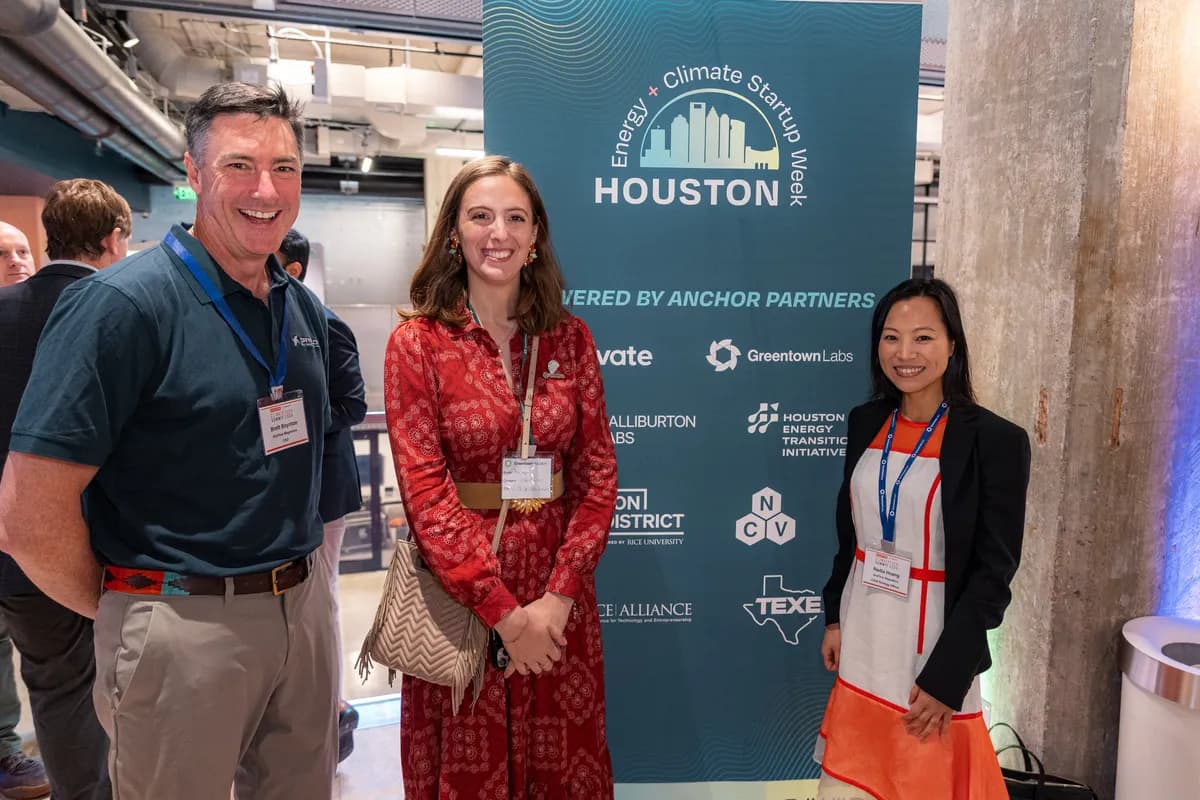
Opening remarks: The Power of “And”
Georgina Campbell Flatter (CEO, Greentown Labs) opened by quoting the words she saw displayed prominently across Houston’s IAH airport: “This is where the world comes together, for every flavor, for every experience, for every moment. A world in a city.”
Bringing different worlds together, she said, sits at the center of Greentown’s own story, which started when four entrepreneurs in Boston who couldn’t afford separate space shared one warehouse in East Cambridge, splitting equipment, knowledge, and community.
She used Greentown Houston member Kanin Energy to make the idea concrete. The company came to Houston from Canada four years ago for industrial expertise and deployment partners, and just an hour before the Summit began, it announced $100M in new funding to scale its pipeline of projects that turns industrial waste heat into power. Kanin has kept a presence in Canada while putting down roots in Houston.
This was just the first of many examples shared throughout the day about Houston’s strength as a launchpad for energy and industrial innovators.
The entrepreneurs’ vision, grit, and determination drove that success, but they were also clear that the relationships and partnerships they built here were critical.
From there she turned to Telluride, where this July she met for a week with a group of world experts in finance, policy, and innovation across climate and energy. The focused, intimate discussions uncovered two truths.
First, the world needs more energy. Energy is essential for prosperity, health, education, and human progress at large. It cools homes, powers hospitals, runs factories, builds infrastructure, and creates jobs. Billions of people still lack sufficient access to reliable, affordable energy—and demand will continue to grow.
Second, our climate is changing, and the risks are already here. Climate change is not only about temperature. It is about water, extreme weather, health, infrastructure, food systems, and the resilience of the communities in which we live and work. The next twenty years are largely locked in by emissions already in the atmosphere, and it is up to us to decide what the decades after 2050 will look like.
By practicing urgent optimism, we embrace both of these truths at Greentown.
Campbell Flatter said the strongest alignment to come out of Telluride wasn’t a trade-off between energy and climate. It was a different question: how do you build an energy system that’s more abundant, more reliable, more affordable, and cleaner, all at the same time?
That’s where the power of “and” comes in, and where “unlikely friends” might turn out to make all the difference.
Incumbent industry giants and breakthrough innovators.
Policymakers and technologists.
Meeting soaring power demand and stewarding our world’s resources.
Corporate venture and student entrepreneurship.
Our home turf and ecosystems across borders.
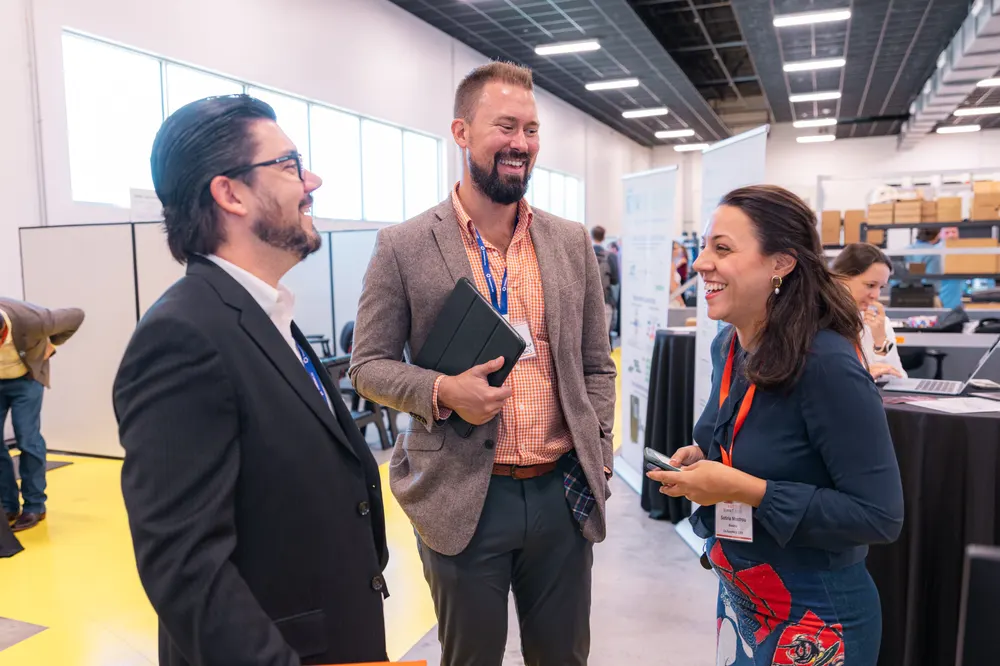
Houston Climatetech Summit celebrated these pairings at every turn throughout the day, from the panel discussions onstage down to the segments highlighted at the Open House.
Campbell Flatter finished her remarks by challenging the audience to decide: “What is my superpower, and who is my unlikely friend?”
Scaling geothermal, and a path to IPO
Featuring:
- Tim Latimer, CEO & Co-founder, Fervo Energy
- David Baldwin, Partner, SCF Partners; Executive Director, OpenMinds; Greentown Board Member
- Jeremy Pitts, Managing Director, Activate Houston (host)
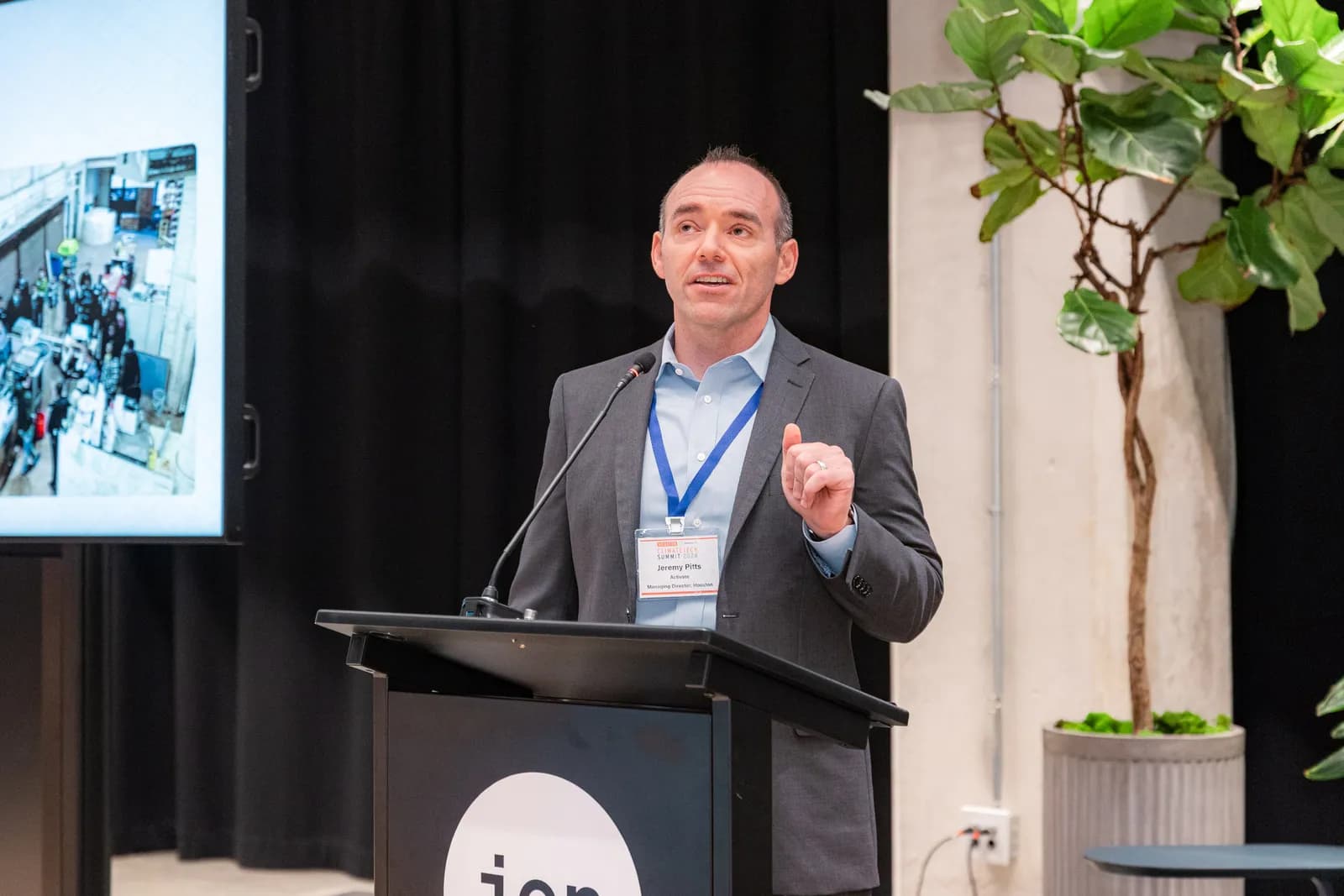
Latimer described the conventional wisdom of the energy industry during his early career. Before hydrocarbon production took off in the late 2000s, experts had predicted U.S. oil and gas production would dwindle to nothing. “But,” he said, “they hadn’t accounted for what innovation could do.”
He founded Fervo on the concept that drove the shale revolution: drilling horizontal wells and injecting fluids into the subsurface could lead to a significant untapped energy resource. Instead of searching for oil and gas, though, Latimer and the Fervo team went looking for the heat of the earth itself.
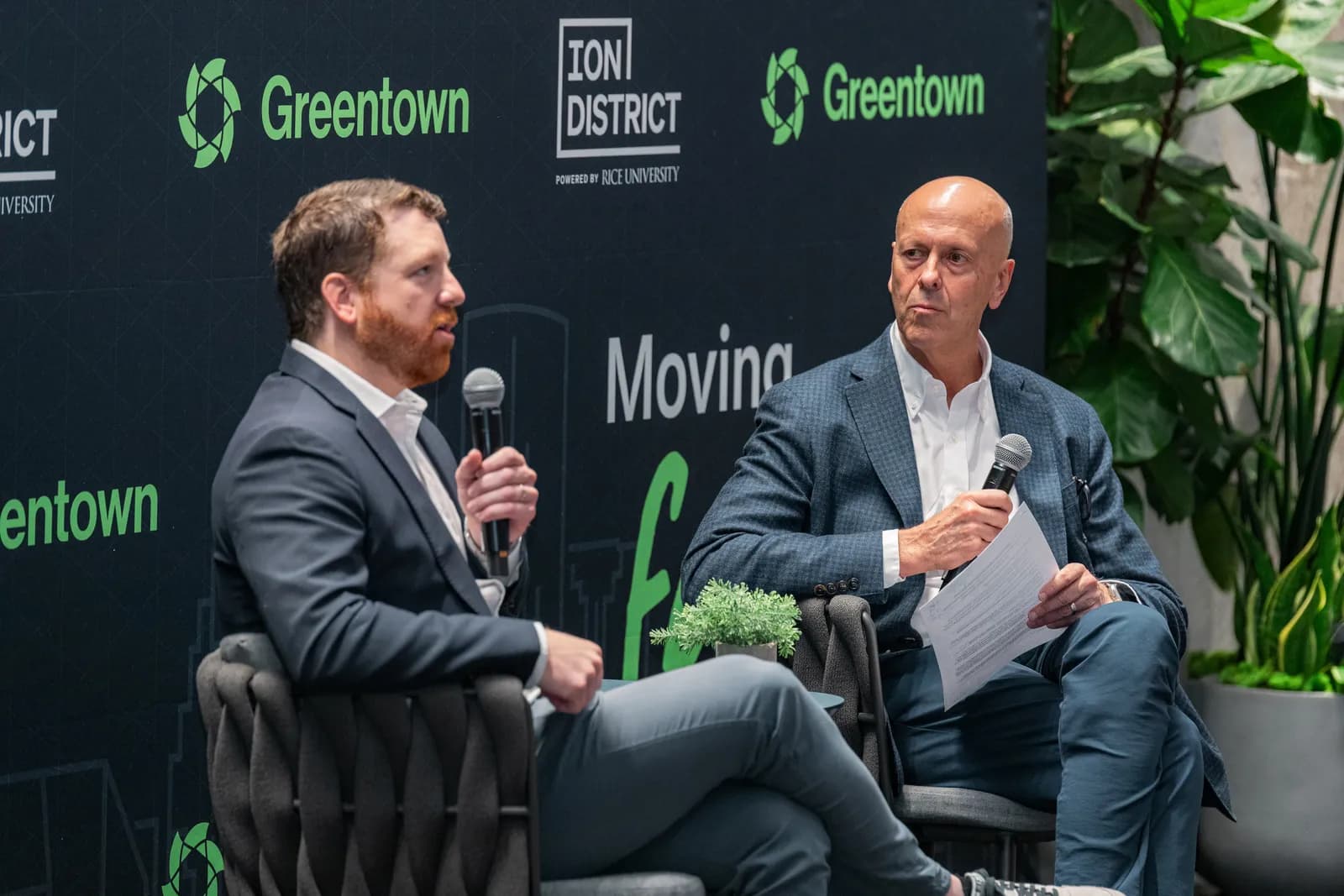
He reflected on a particular moment in Fervo’s journey. When the company’s first well took far longer to drill than expected, he feared the entire technical thesis was wrong. He feared losing his investors’ confidence and a tranche of capital along with it. But what kept an investor in the deal wasn’t the setback, it was two questions: did the team know what went wrong, and did the team have a plan to fix it? Yes and yes. The second well exceeded expectations, and subsequent wells continued to show that the company could drill deeper wells at a faster rate. Latimer emphasized that by cutting the time it takes to drill, Fervo is falling down the cost curve and approaching cost parity with traditional oil and gas resources.
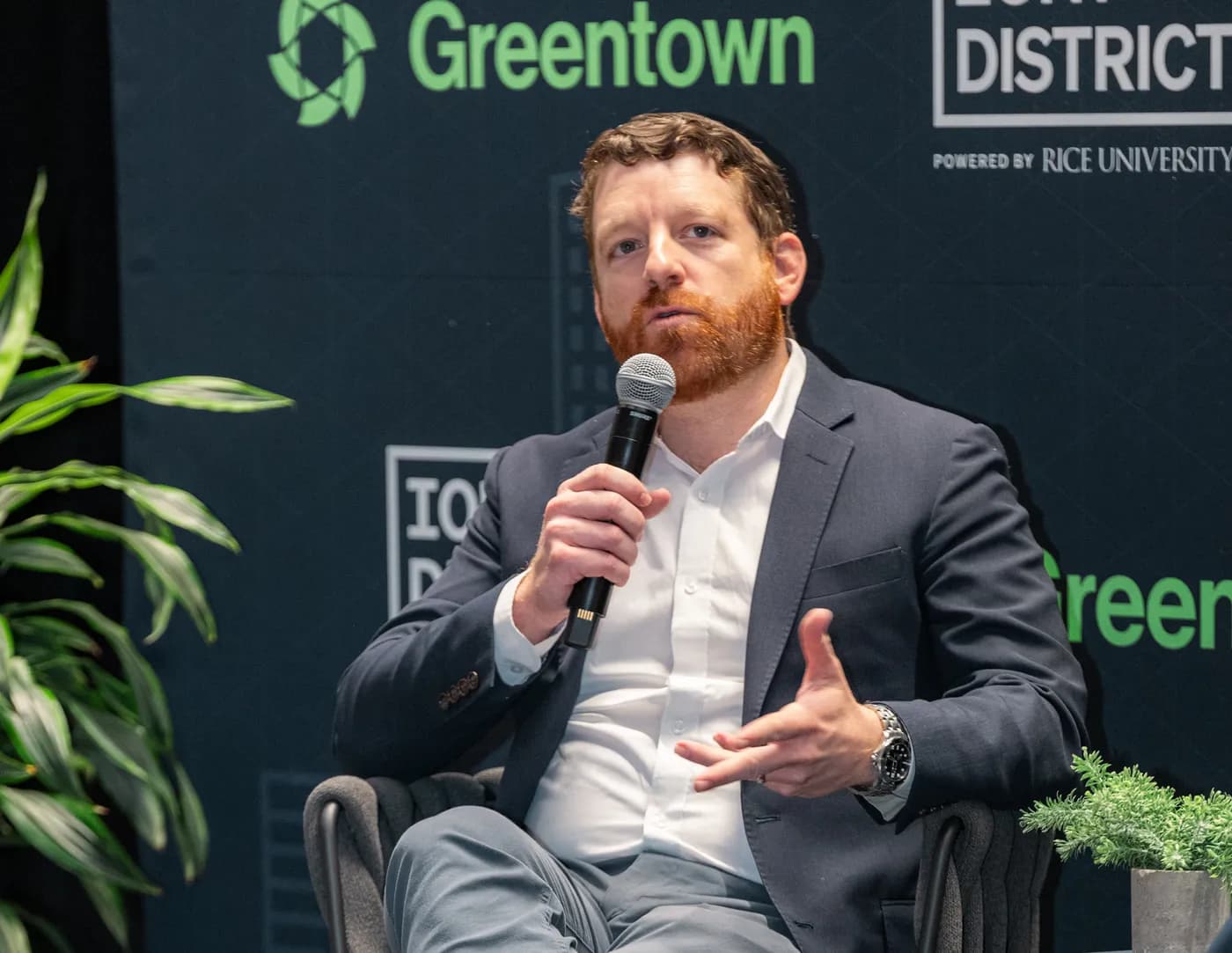
And that’s his lesson for today’s hardtech founders: the comeback is worth a thousand times more than the setback.
An unexpected turn can also be more than just a learning opportunity. It might also be an unintentional opportunity to lay the groundwork for the future, he explained through the example of Fervo’s recent power purchase agreement with Google, the largest in the history of enhanced geothermal. “Part of the reason for the project’s success was our five-year-long relationship”—including setbacks, mistakes, and adjustments—that proved the partnership’s viability for success, and “helped us make sure we were choosing the right partner.”
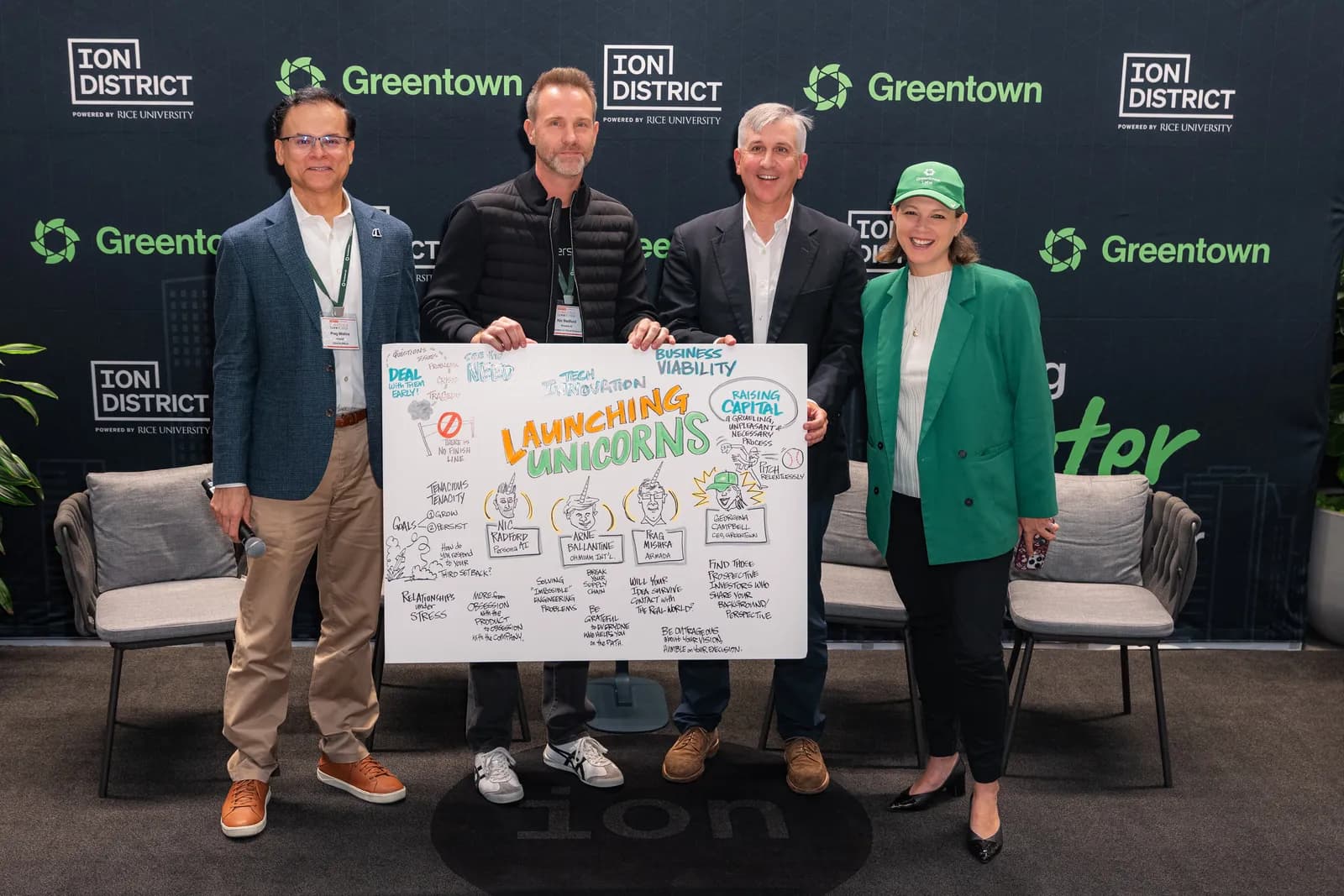
Unicorn founders reveal what breaks on the way to scale
Featuring:
- Arne Ballantine, Co-founder, Ohmium International
- Nicolaus Radford, CEO & Co-founder, Persona AI
- Prag Mishra, Chief AI Officer, Armada
- Georgina Campbell Flatter, CEO, Greentown Labs (moderator)
The word of the hour? Persistence.
Radford, who has taken five companies through scale and one across the IPO line, called it ‘tenacious tenacity’: the realization that there’s no finish line, that crossing one just reveals the next. The first setback doesn’t test one’s character, he said, and neither does the second. It’s the third and beyond that defines one’s entrepreneurial journey.
Don’t be afraid to be outrageous about your vision.
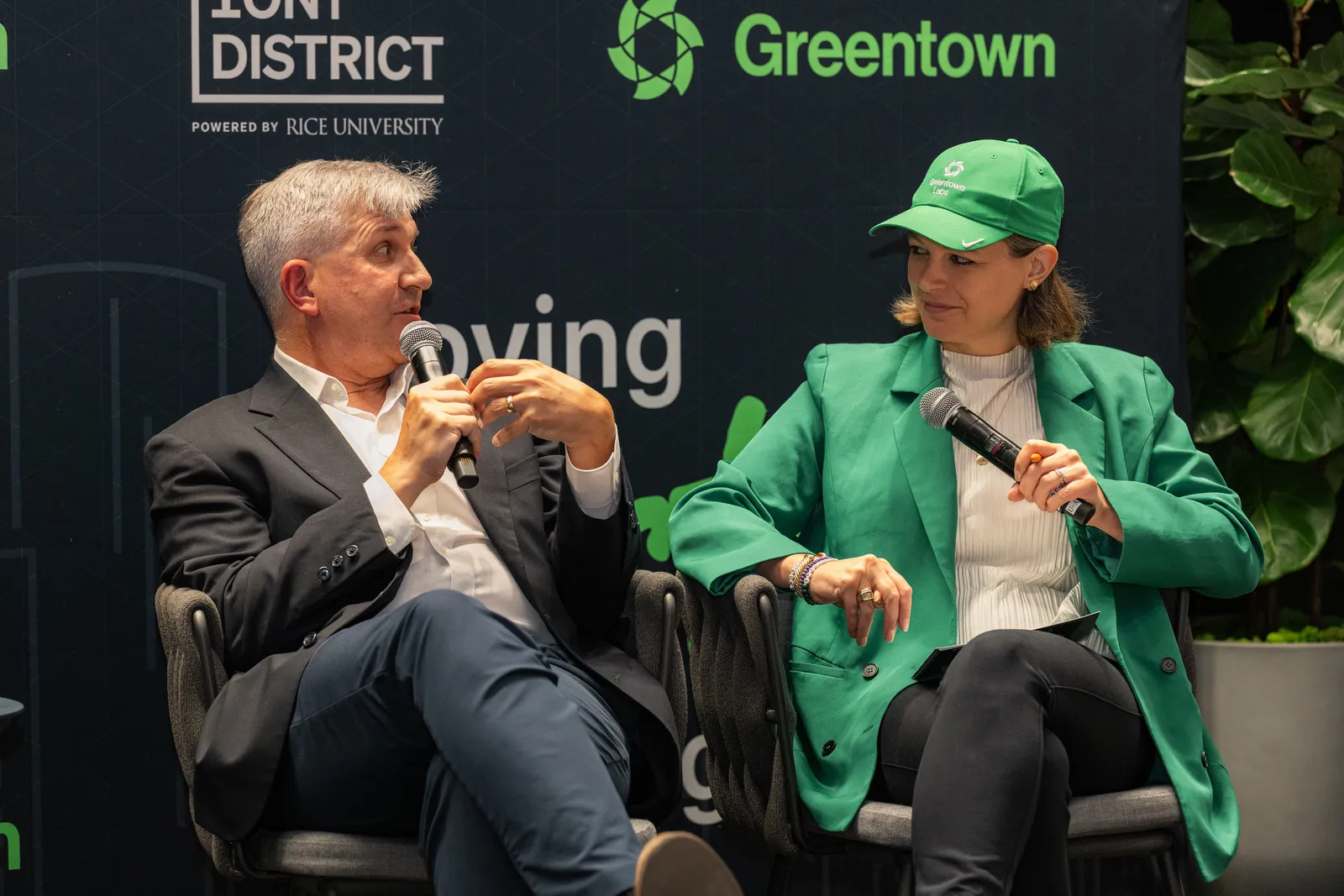
So, persistence in hand, what changes for a founder on their way to scale? “The mindset shifts from developing and scaling a technology to building a company that will grow—the company becomes the product,” said Radford.
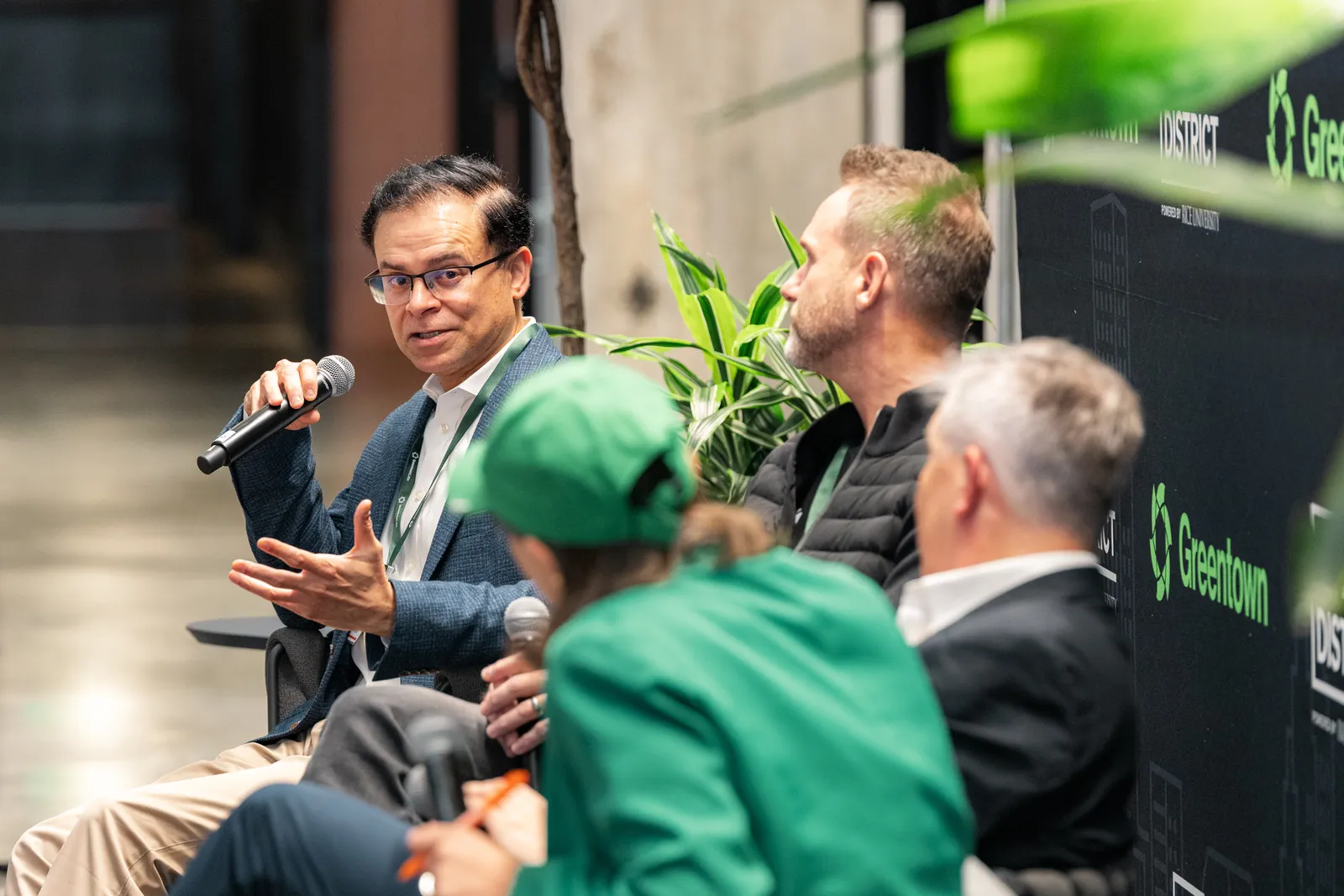
To close the conversation, Campbell Flatter asked: how have you learned to deal with a crisis?
Every problem should be treated as a learning opportunity—each and every one presents a lesson about your customers, your technology, your product, or your team; as a founder, you just need to identify it.
Nic offered a framework a mentor once shared with him: “Deal with concerns before they become issues. Deal with issues before they become problems. Deal with problems before they become crises. Deal with crises before they become tragedies.”
Leadership, he said, is facing each one head-on rather than shying away, because the setbacks come regardless of the plan; what matters most is the response.
Is the nuclear comeback different this time?
Featuring:
- Bobby Gallagher, CEO, CTO & Co-founder, Deployable Energy
- Christopher Hanson, former Chair, U.S. Nuclear Regulatory Commission and Head of Implementation, Project Omega
- Marcus Nichol, VP of Nuclear Deployment & Fuel Cycle, Nuclear Energy Institute
- Lawson Gow, Chief Strategy Officer, Greentown (moderator)
Another unlikely friendship onstage included an entrepreneur, a former federal regulator and the head of the trade association that operates between them.
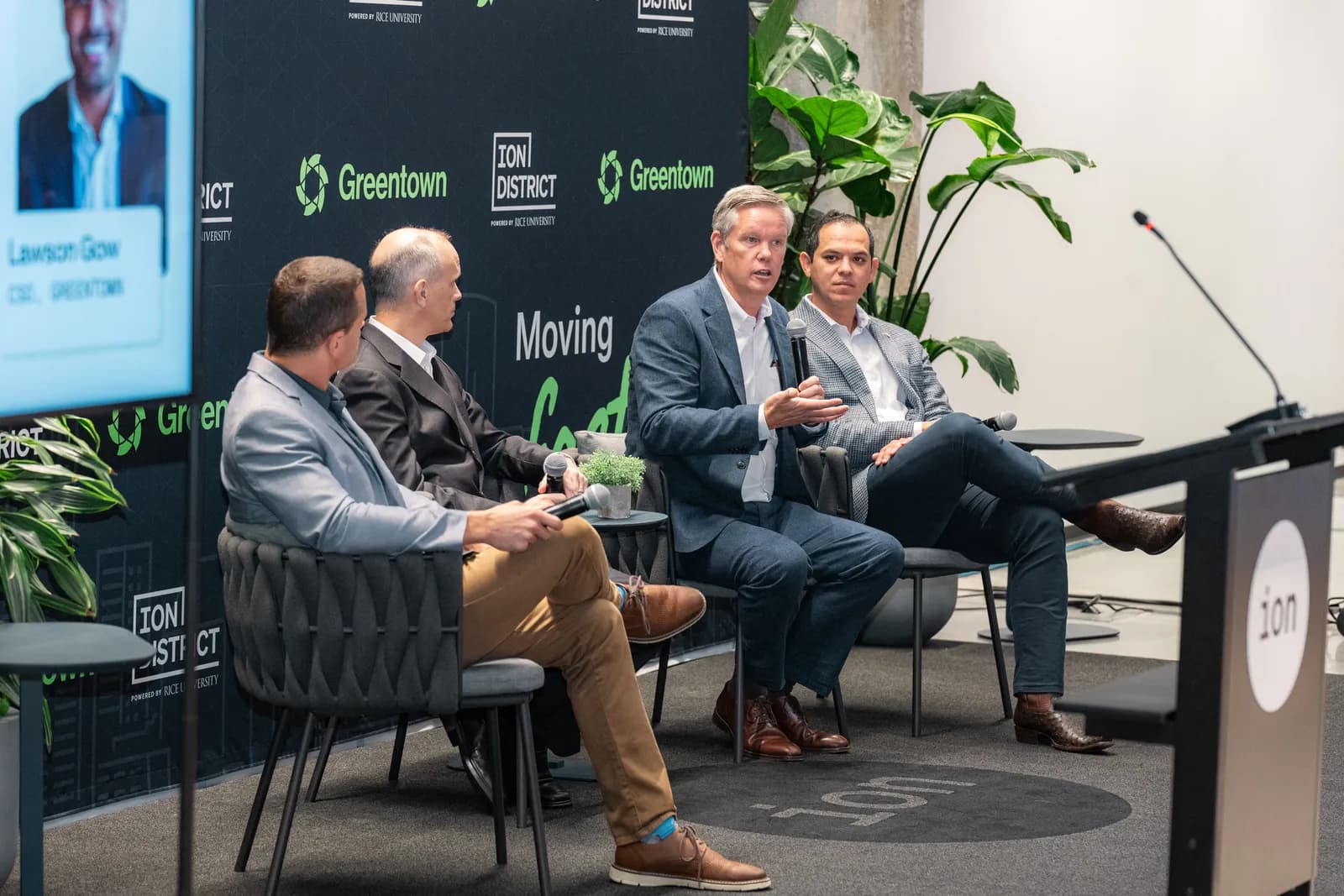
The conversation on where nuclear sits today and what could be ahead for the industry started with policy. A 2025 executive order ordering the government to rebuild the domestic uranium supply chain and fast-track new reactor deployment sent a charge through the nuclear ecosystem—“it locked in the whole nuclear supply chain to supporting startups,” said Gallagher—and its crucial bipartisan support helped seal out policy risk in a way that galvanized investment into the sector.
Houston’s unique advantages came into the forefront. With high industrial power demand, an ecosystem experienced with prioritizing reliability in its energy system, and an extensive manufacturing base Gallagher said is “capable of creating things that go under the sea, up into space, and even inside the human body,” the region proves itself as an ideal center of gravity for this renaissance.
Powering the AI boom
Featuring:
- Jason Wells, Chair, President & CEO, CenterPoint Energy
- Eliecer Viamontes, CEO, Entergy Texas
- Aisling Carlson, Chief Growth Officer, Greentown (moderator)
Growing our power supply to meet surging demand was a consistent theme throughout the day’s conversations, so Carlson focused on one key question for the two CEOs on the morning’s final panel: why are these two utilities suited to rise to the challenge?
CenterPoint and Entergy Texas have spent years serving large industrial customers with heavy load demands, and they say that experience is translating directly into how they’re approaching data centers now.
Both pointed to Entergy’s Meta partnership in Louisiana as their go-to example of what responsible development looks like: new tax revenue, local investment, and benefits that reach past the company itself.
This partnership’s upside comes with strings attached. Viamontes said Entergy is selective about who it connects, screening out what he called “the contenders from the pretenders,” making sure data centers cover their fair share of costs without putting the existing customer base at risk.
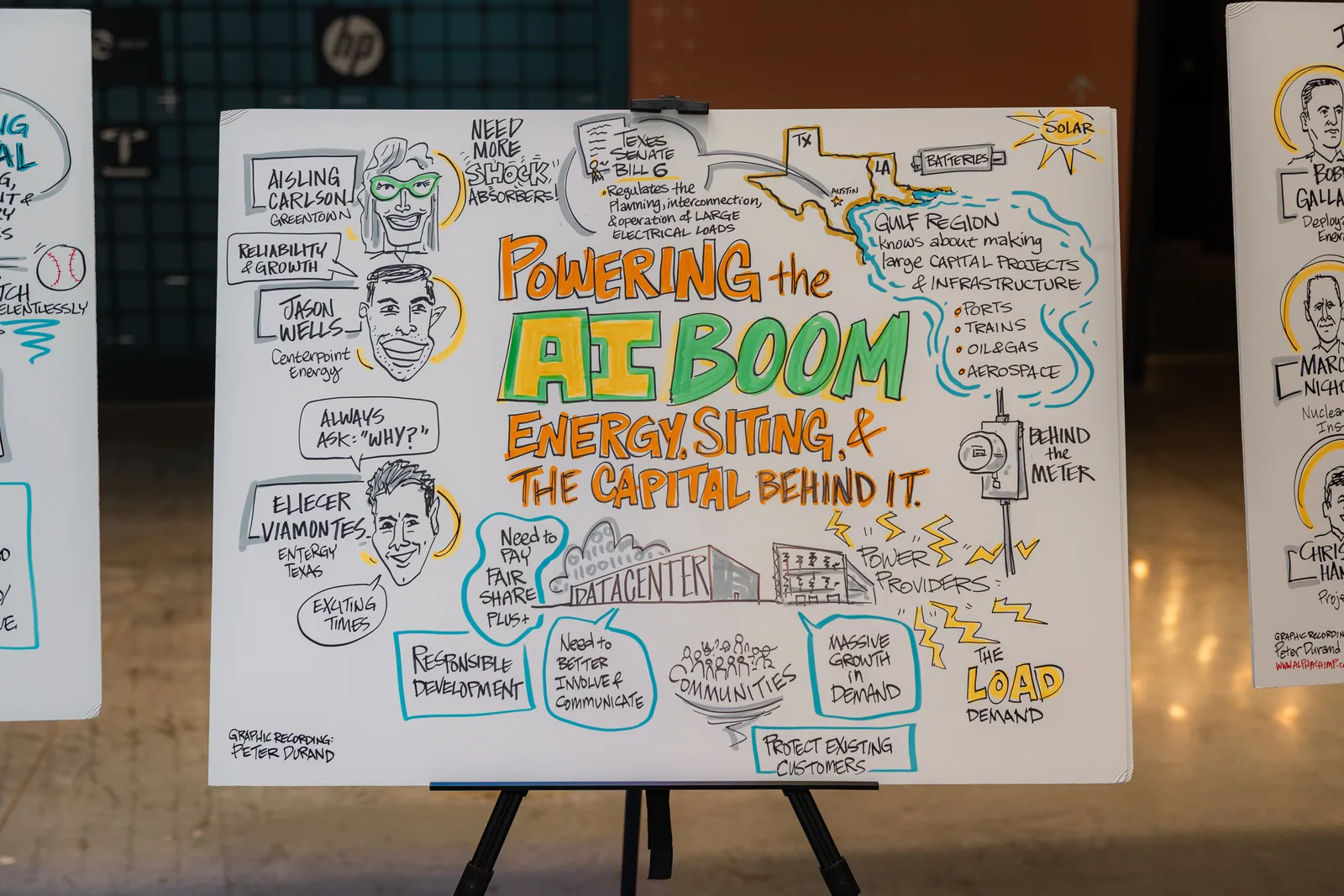
Wells made a similar case for Texas’s Senate Bill 6: data centers now absorb a share of system costs that would otherwise fall to ratepayers, which he said is actually pushing electricity costs down, not up.
Both credited the Gulf Coast’s build-out of solar and battery storage as a real edge heading into this moment. Asked what innovation they still want to see, Viamontes pointed to using AI to catch outages before they happen; Wells pointed to the need for more “shock absorbers” on the grid to help it ride through disruptive events as more large, fast-changing loads come online to power the future.
Open House & Startup Showcase at Greentown Houston
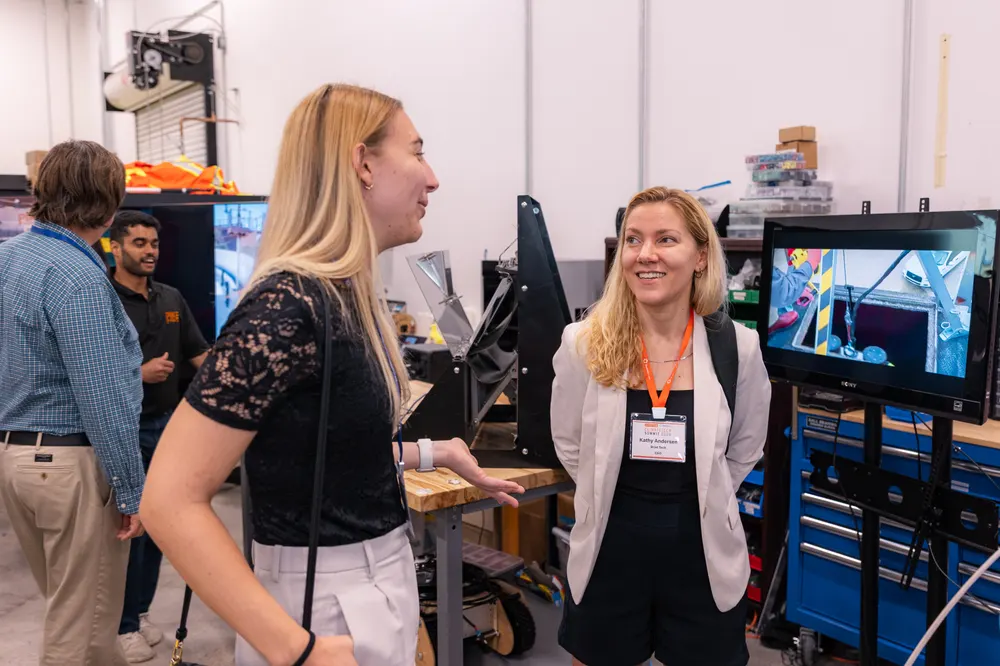
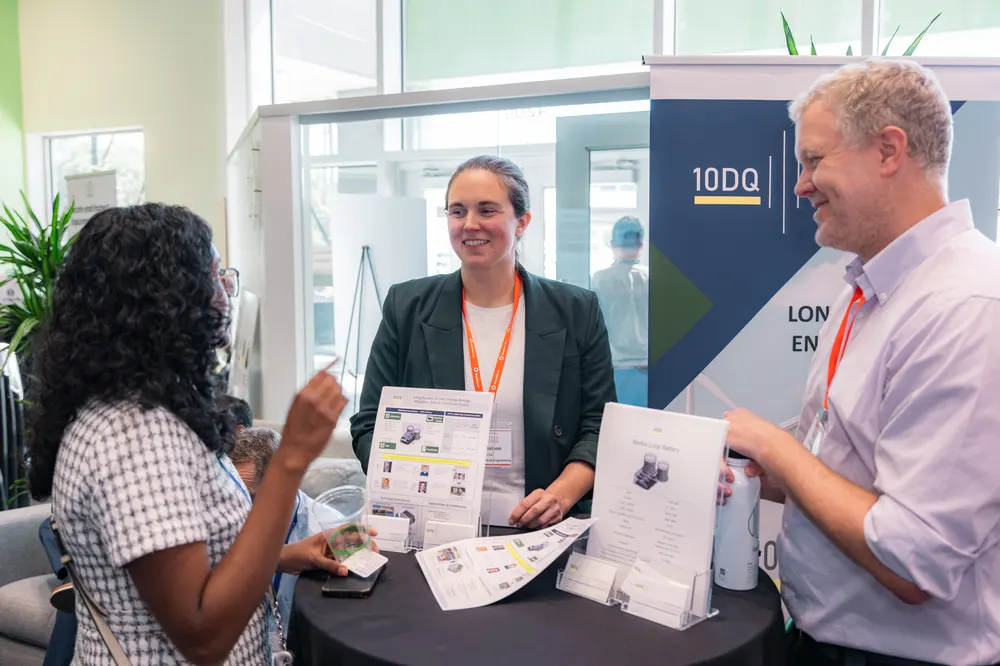
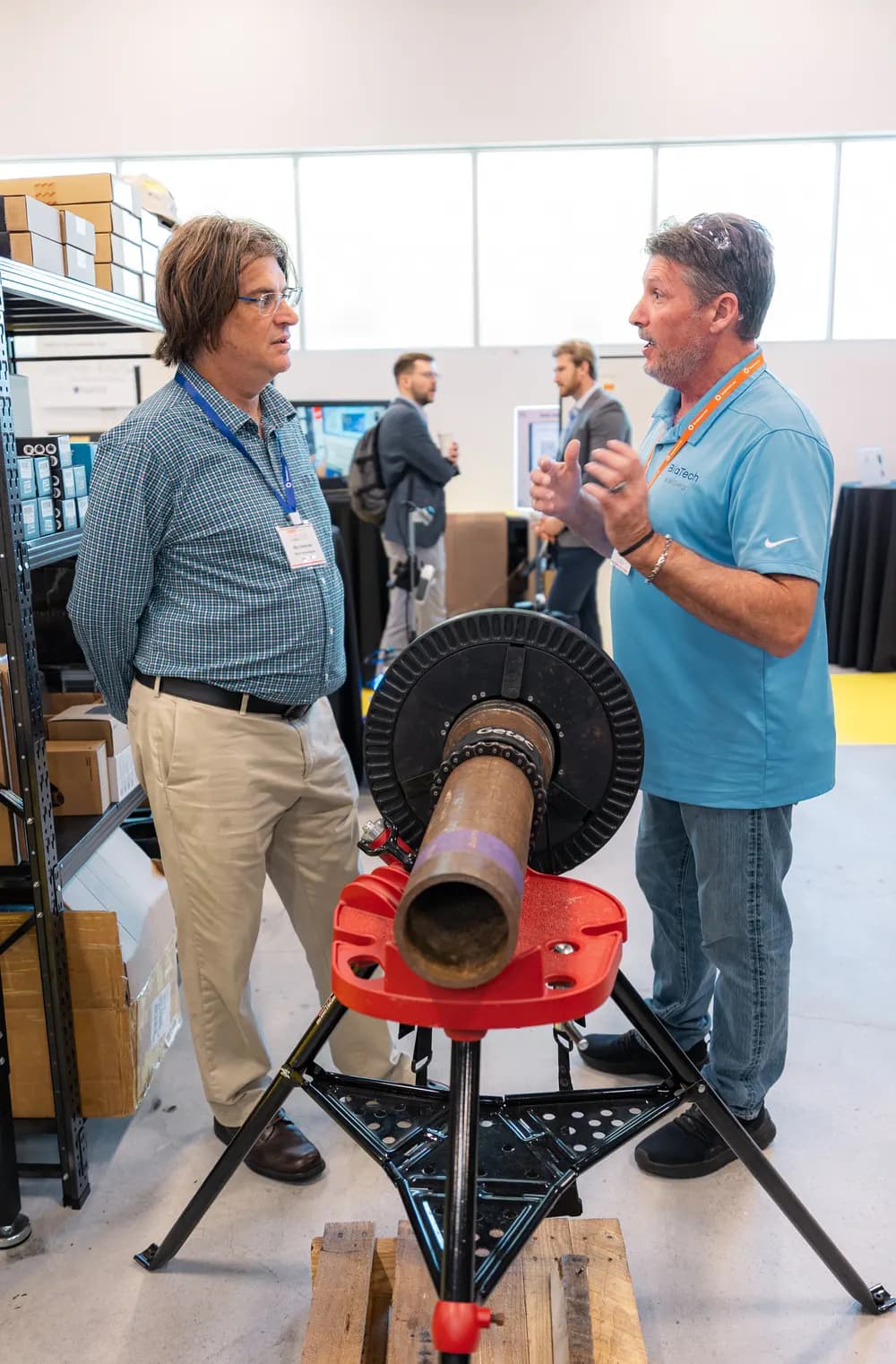
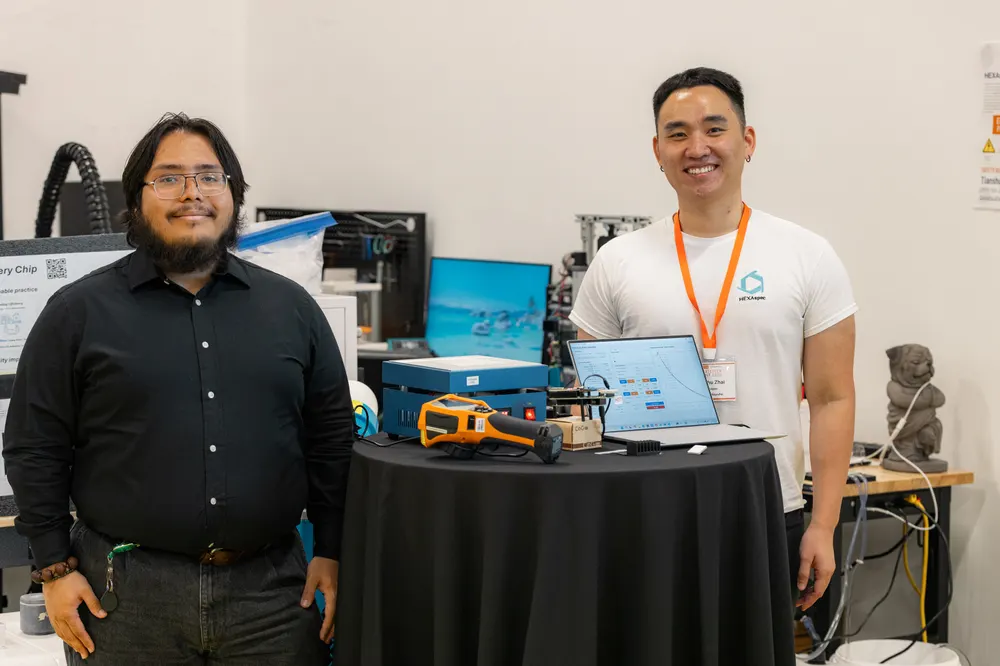
The event continued on after lunch at Greentown Houston’s Open House, where 55+ Greentown startups showcased their technologies right in the lab where they’re being developed. Plus, a conversation on corporate venturing, and three lightning pitch segments competing for cash prizes.
Corporate money, global reach
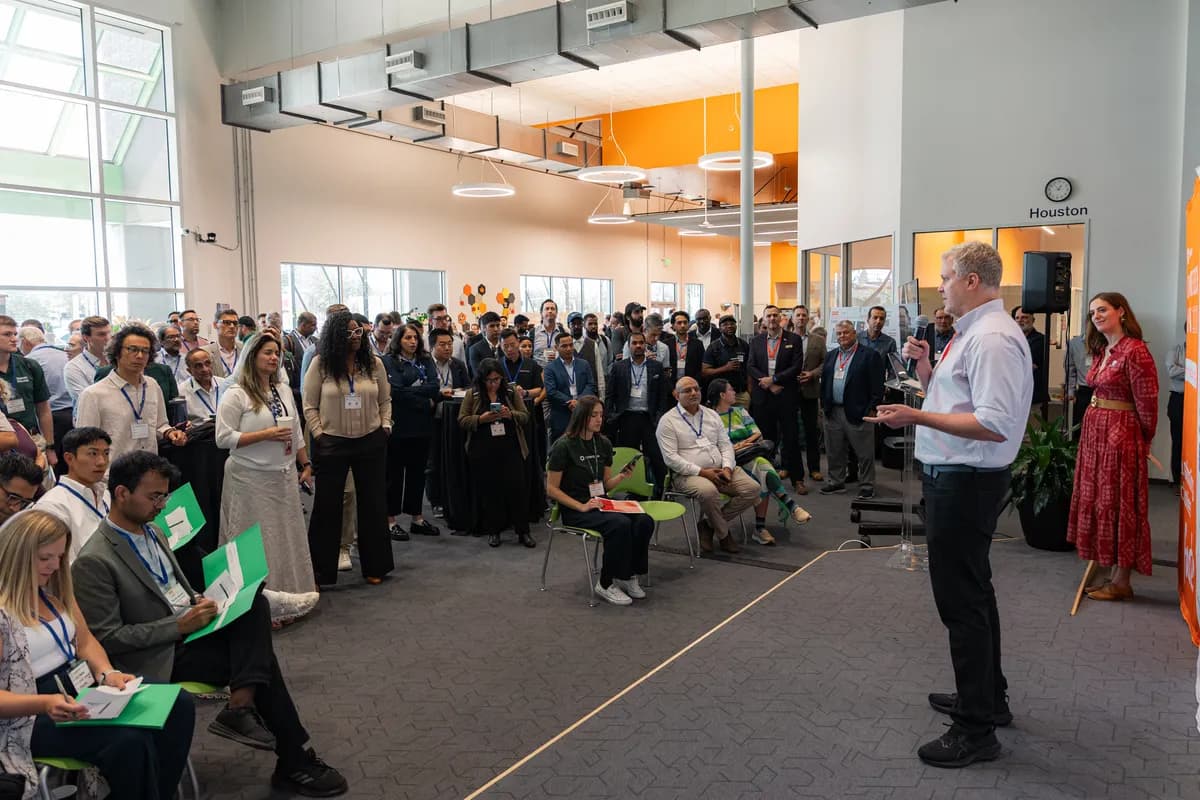
The afternoon kicked off with a panel discussion featuring three corporate venture capital (CVC) leaders: Luis Alcoser (GM Future Energy Fund, Chevron Technology Ventures), Kei Morita (Cross Border Startup Investor, ENEOS Holdings), Aaron Toppston (Managing Partner, GS Futures) and Sameer Bandhu (Managing Director, Ventures & Licensing, GE Vernova), diving into how corporate venture arms are underwriting climatetech right now.
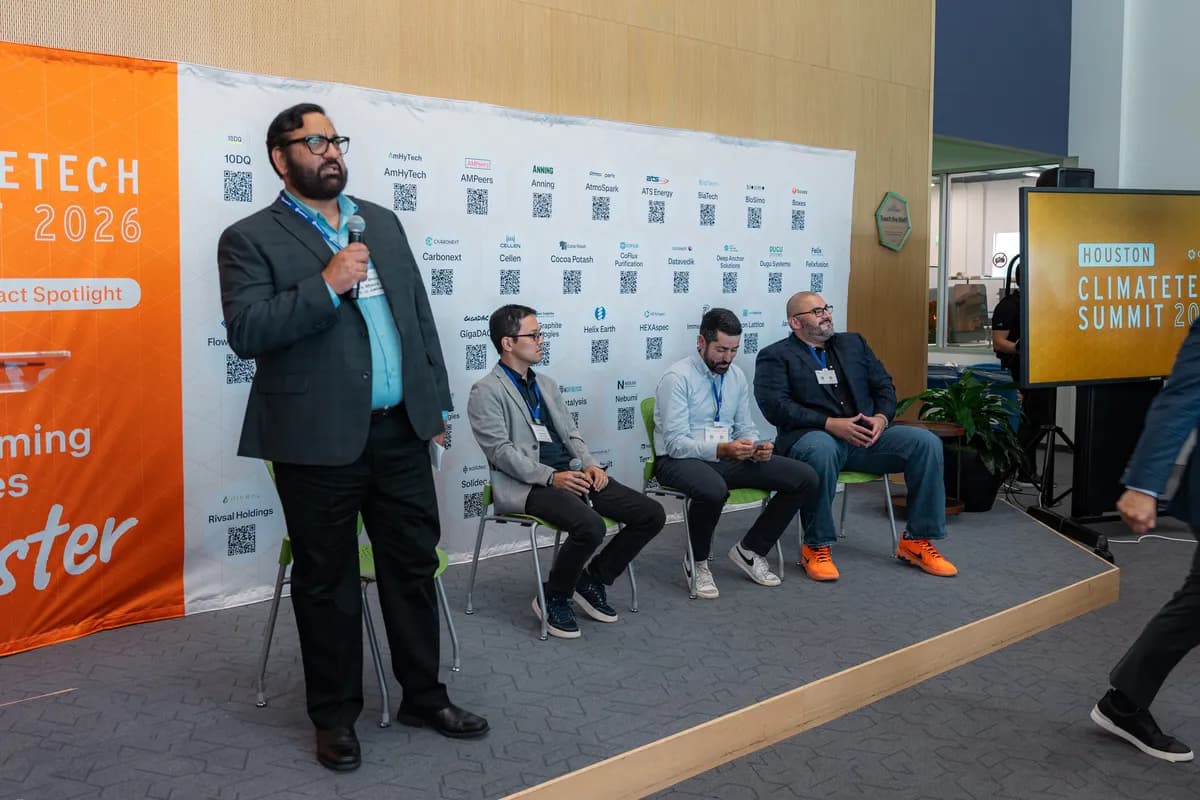
Three lightning pitch segments for $1.5k in cash prizes
Spotlight: Ecosystem Exchange
Our Ecosystem Exchange program is a unique bilateral engagement model designed to foster cross-border collaboration, with our partners Equinor and Woodside Energy. We’ve hosted startup delegations from Norway and Australia to develop connections among Houston’s ecosystem, and brought Greentown startups to Stavanger and Perth to do the same.





Spotlight: TEX-E Student Innovators
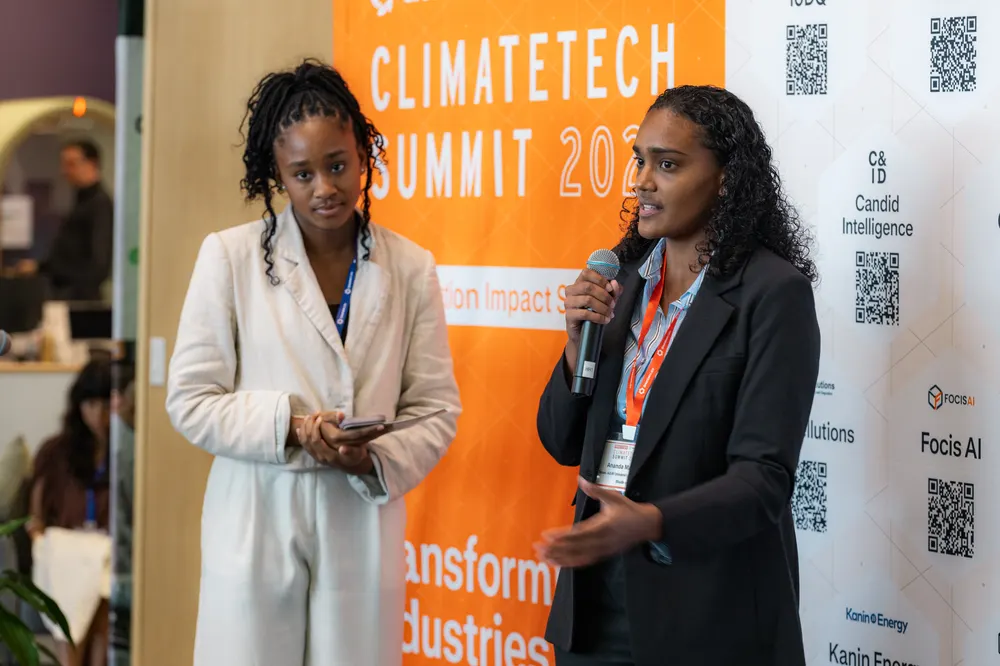
TEX-E, an initiative designed to foster student-led energy and climate entrepreneurship among Texas universities, took to the stage to share more about its Fellows program and give three student Fellows the opportunity to pitch their ventures:
Six Greentown members
Featuring:
- FlowCellutions
- Dugu Systems
- Gemini Energy
- HEXASpec
- Solitude Labs
- MCatalysis
All three pitch segments were judged by Erin Madro, Justin Yeung, Jay Kim, Rawand Rasheed, Harshit Agrawal, and Moji Karimi.
- 1
MagDrive Technologies
$1k cash prize from Energy Transition Ventures
- 2
HEXASpec
$500 cash prize from Foley Hoag LLP
55+ Startup Showcase
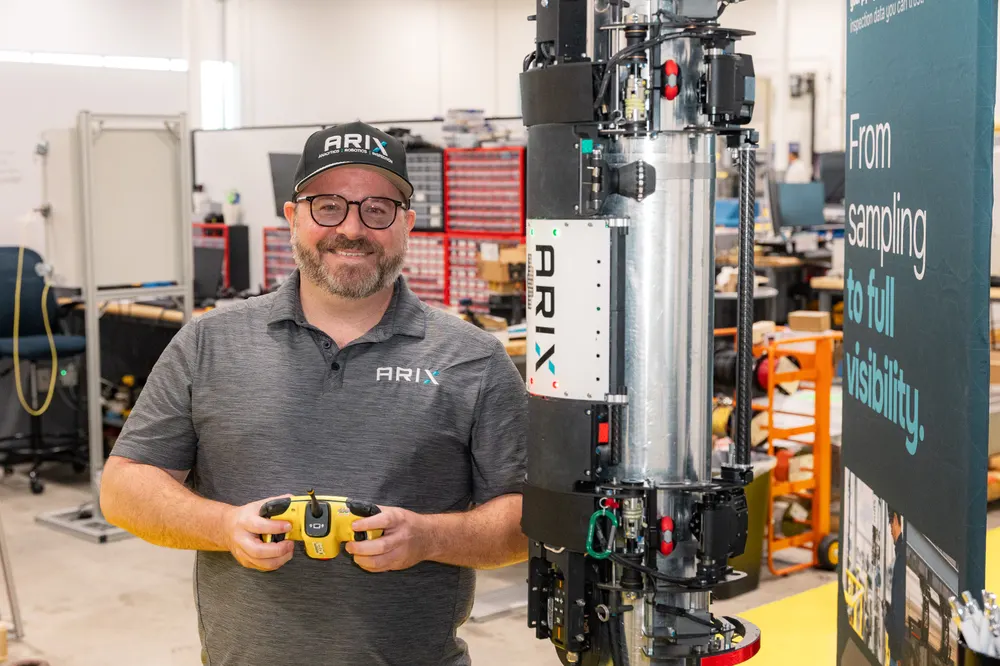
Throughout the Open House, 55+ Greentown members showcased and demoed their tech in our prototyping lab, bringing the ecosystem in to see right where their solutions are developed every day.









































Ending the day with $25k in prizes on the line
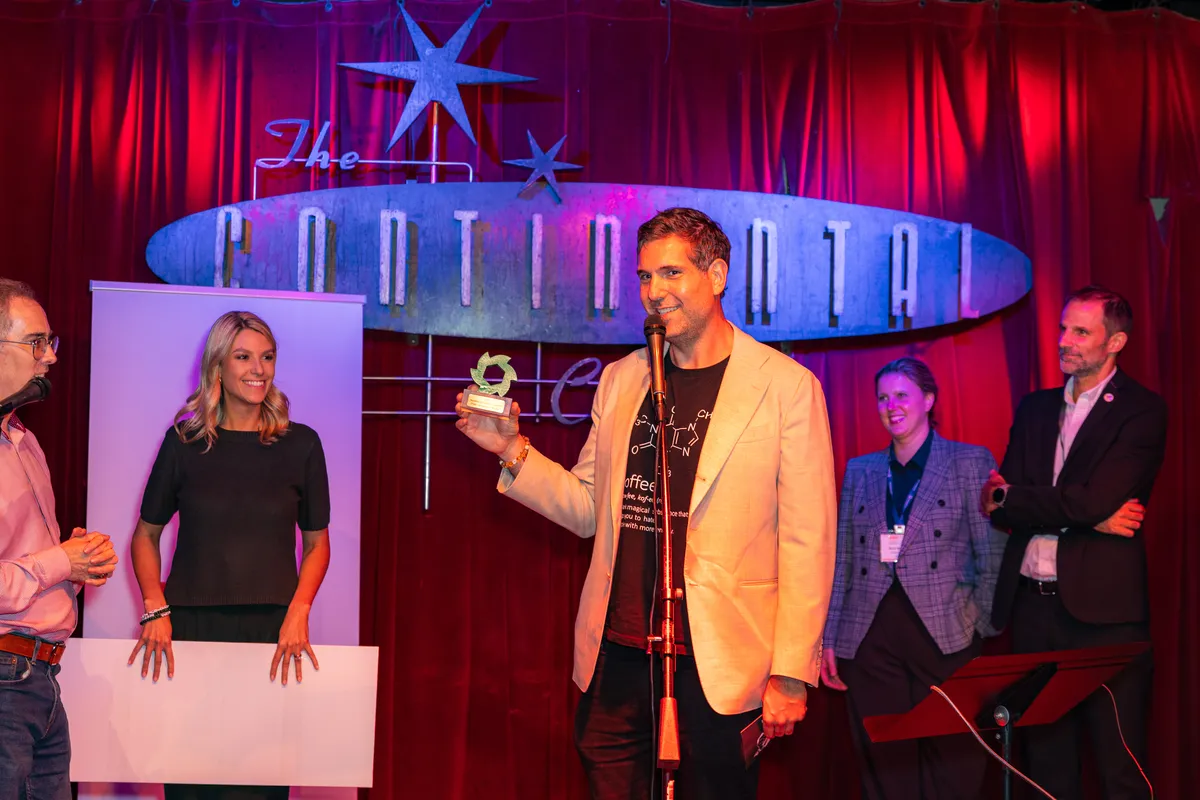
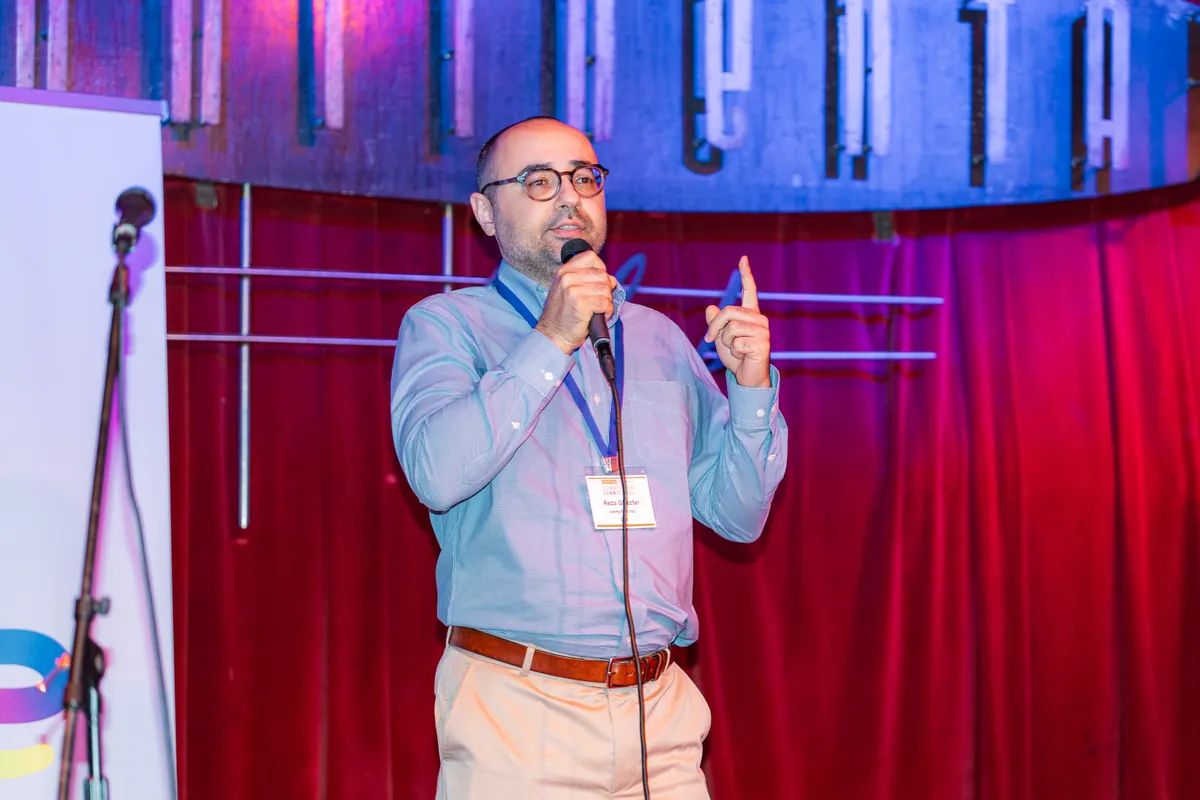
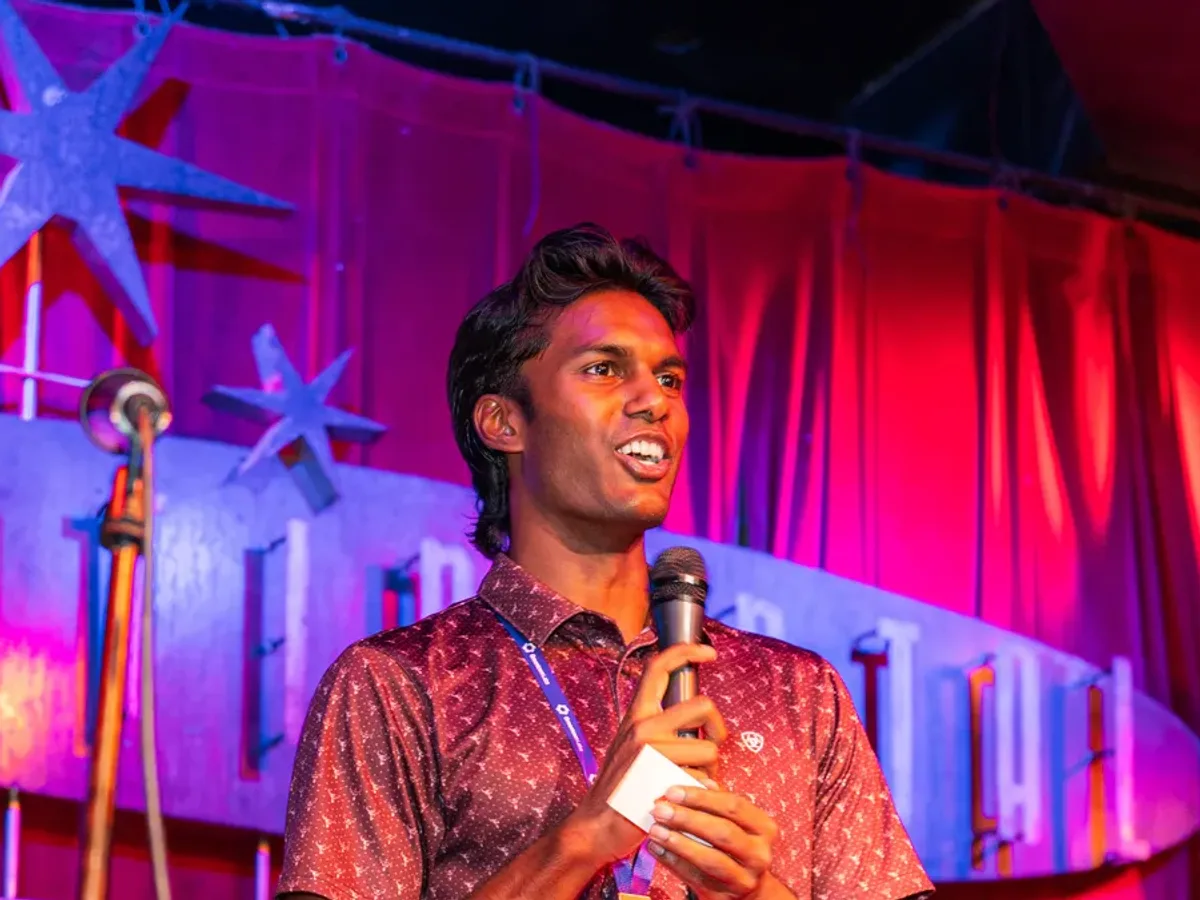
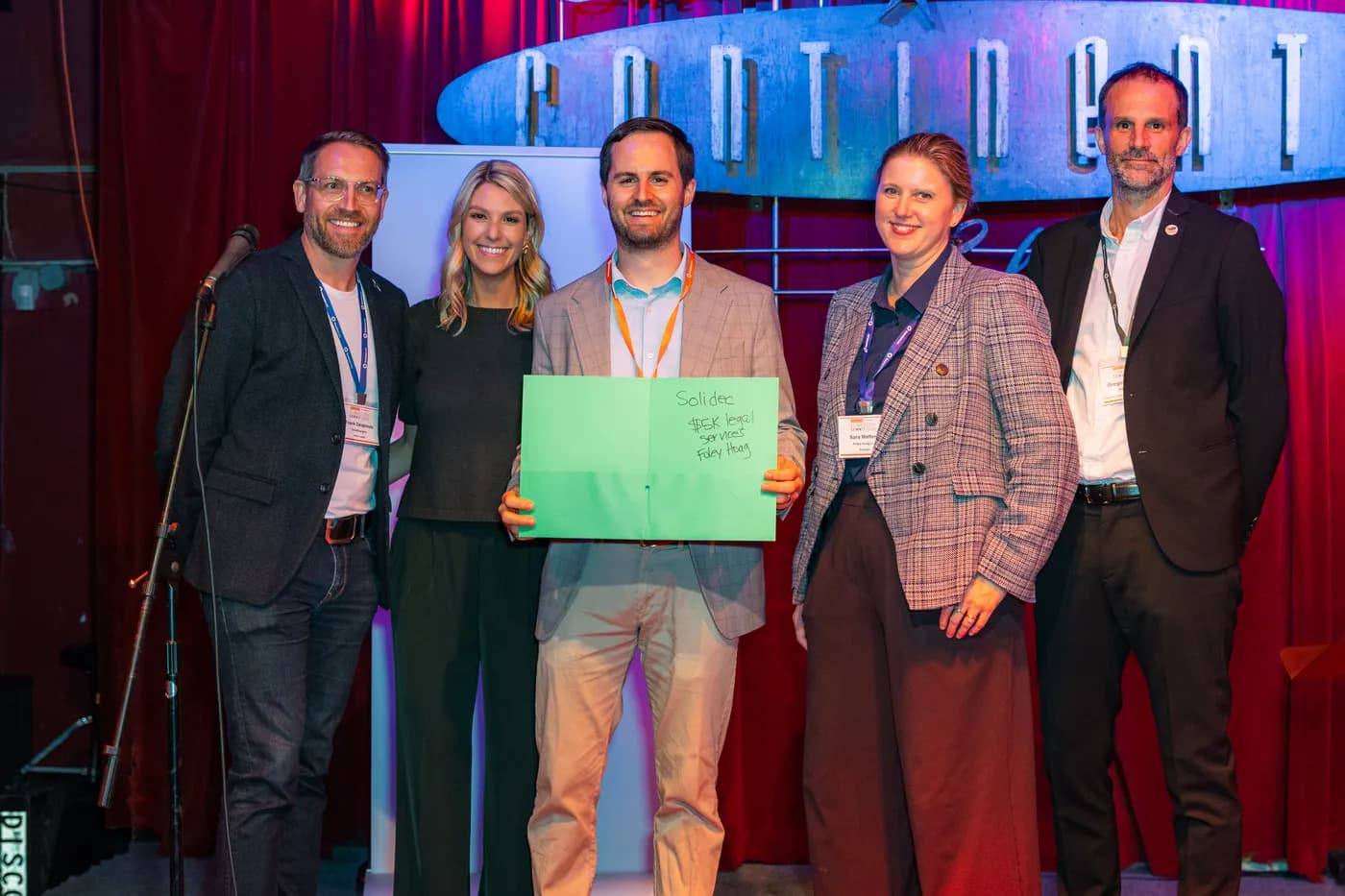
The crowd headed to Continental Club for an evening of networking and pitches. Emceed by Hope Dose’s Matt Myers, the evening kicked off with an introduction to our partner and sponsor TotalEnergies’ CO2 Techno Hub from three leaders on its team:
- Gregoire Chabrol, CO2 Utilization, Performance and Industrialization Manager, TotalEnergies
- Frank Despinois, Innovation Ecosystems Coordination Lead, CO2 Techno Hub, TotalEnergies
- Brett Andrews, Chief Commercial Officer, Membrane Technology and Research (MTR)
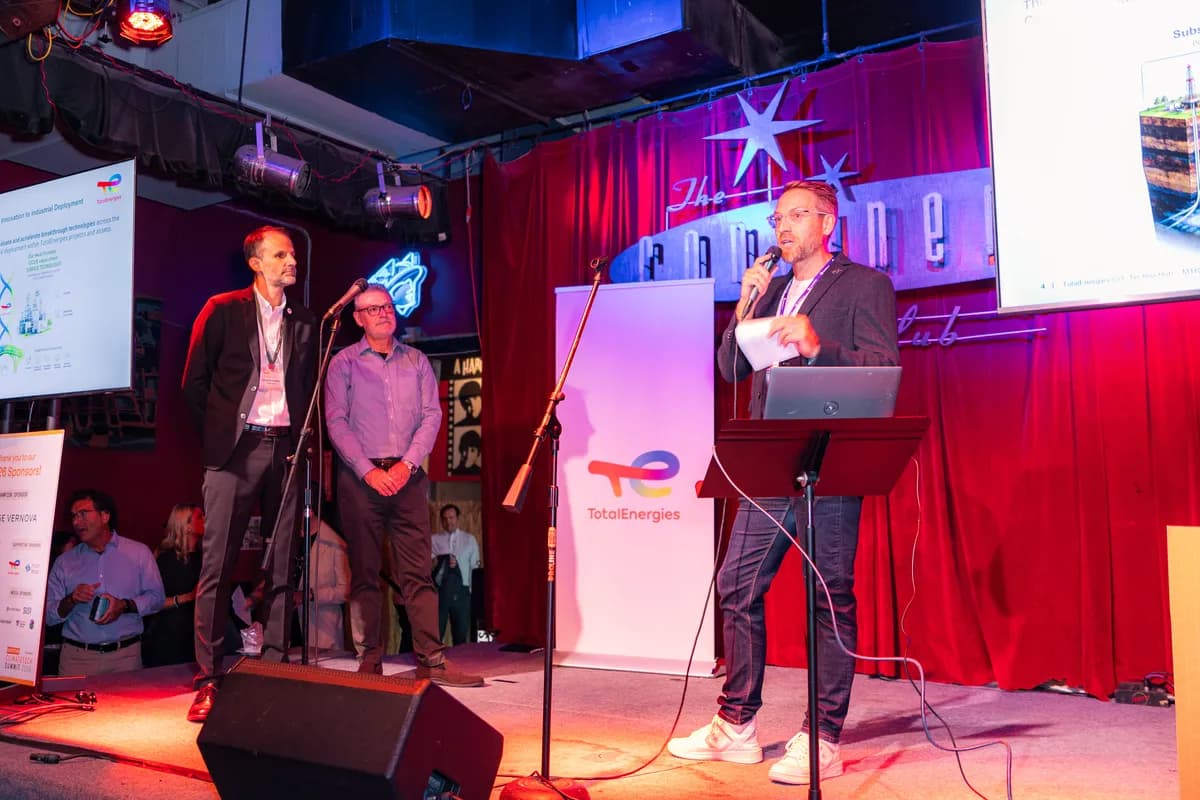
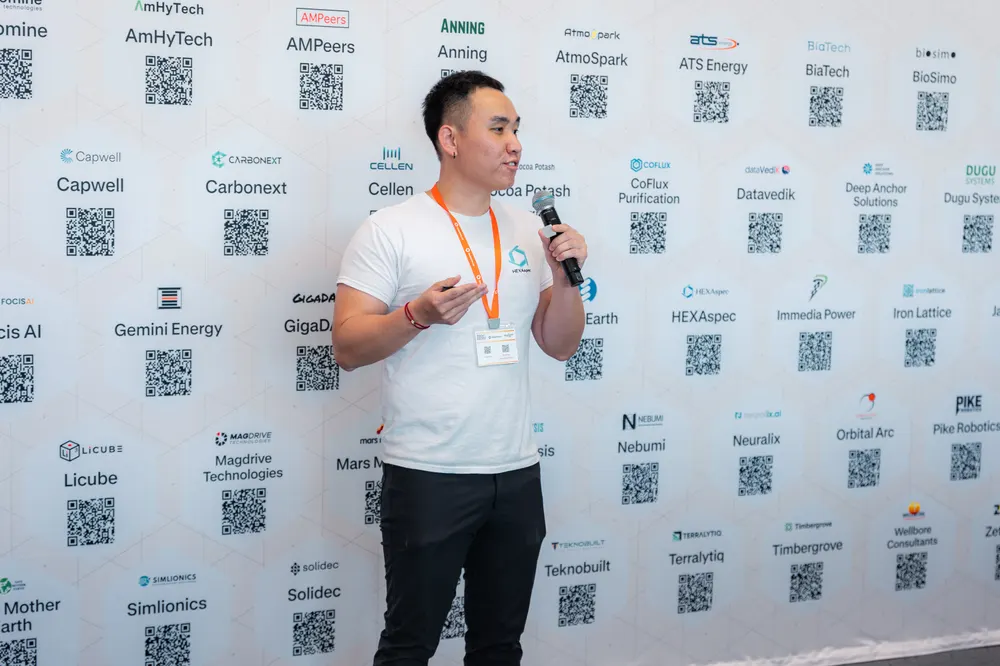
Then, it was time for 11 Greentown startups to take to the stage to compete for a total of $25k in prizes! Participating startups included:
Manufactures high-temperature superconducting wire for high-power electrification infrastructure.
Enables ambient-condition liquid ammonia handling for fertilizer and fuel applications.
Extracts potassium carbonate and fertilizer from cocoa, coconut, and palm-nut waste.
Converts industrial laser scans into a queryable digital twin of refineries and plants.
Develops and finances waste heat to power projects for industrial clients.
Models grid connection points so developers can validate interconnection in minutes.
Develops advanced battery electrolytes that improve performance, safety, and charge speed across battery chemistries.
Deploys its Wall-Eye robot to inspect hazardous tanks without taking assets offline.
Judges
- Dave Dreessen, Chevron Technology Ventures' Future Energy Fund
- Jon Greene, Partner, New Climate Ventures
- Naval Preet Singh, External Ventures Manager, Saint-Gobain
- Philip Llewellyn, Research & Technology Senior Advisor, TotalEnergies
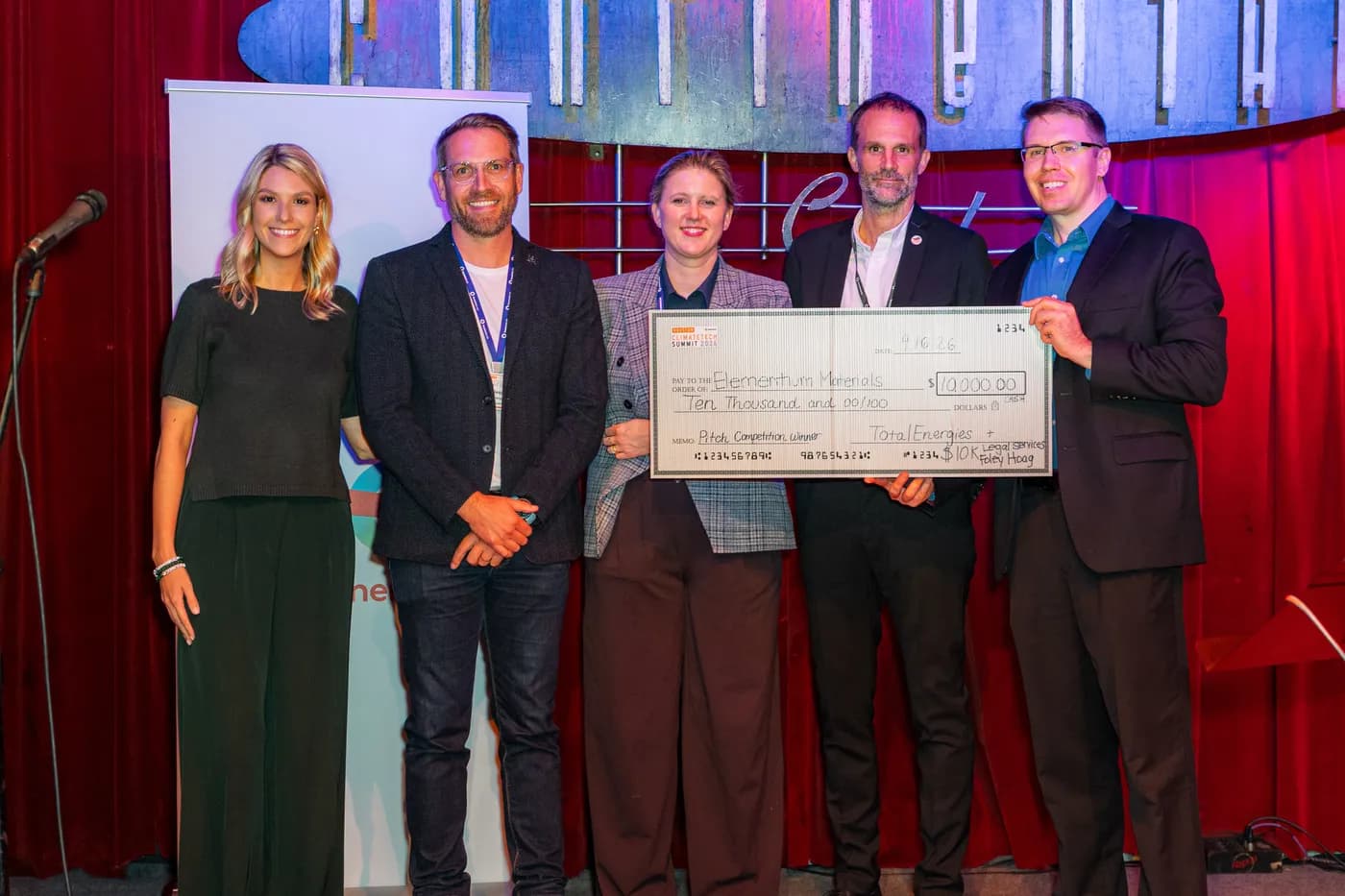
- 1
Elementium Materials
$10k cash prize sponsored by TotalEnergies and $10k in legal support sponsored by Foley Hoag
- 2
Solidec
$5k in legal support sponsored by Foley Hoag
Keep the momentum going: six ways to get involved
Startups
Resource providers
Experts & industry veterans
Thank you to our Climatetech Summit sponsors!